Stuck on the stiff shoulder - Freeing up your assessment & treatment with Jo Gibson
When your patient has a frozen shoulder, or another type of stiff and painful shoulder, you’re in for a challenge. How do you know if your patient has a frozen shoulder or something else like osteoarthritis or avascular necrosis? You’re going to have a hard time getting your patients muscle system to do its job in the presence of stiffness. Do we plug away at the exercises, stretch or mobilise their shoulder, wait for it to “thaw”, get an injection or something else?
In this video series, Jo Gibson (Clinical Specialist Physio) will guide you through how to assess, diagnose and treat the common causes of a stiff, painful shoulder, including frozen shoulder, osteoarthritis, rotator cuff arthropathy and other common causes.
CLICK HERE or on the picture below to find out more about the "Frozen & Stiff shoulder assessment and treatment online course with Jo Gibson, and get your access to these videos now.
Frozen and stiff shoulder assessment & treatment online course with Jo Gibson
Video 1 - Stiff shoulder - Risks & culprits
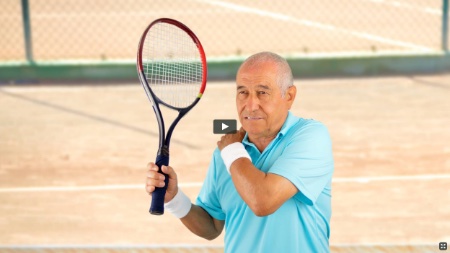
Identify the likely diagnosis from your patients history, causes of a stiff shoulder, and which of your patients are likely to have frozen shoulder, osteoarthritis, avascular necrosis, posterior dislocation or a red flag in video 1.
Video 2 - How to assess & diagnose stiff shoulders
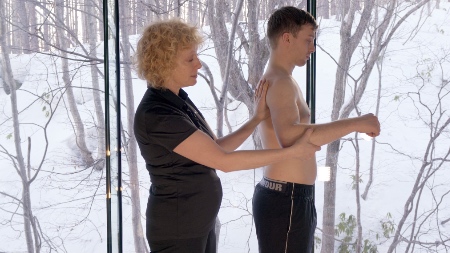
In video 2 you'll explore the questions you need to ask in your subjective to guide your assessment & diagnosis. Discover how to perform an objective assessment to confirm your diagnosis and direct your treatment.
Video 3 - How to treat patients with a stiff shoulder
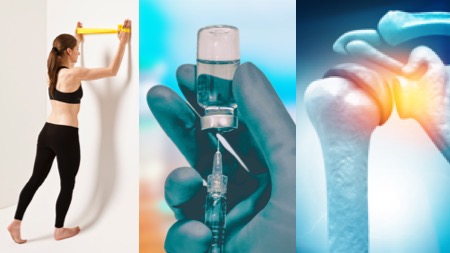
Discover how to target your treatment and improve your results with stiff shoulder patients. Explore whether your treatment of frozen shoulder, OA, AVN and other stiff shoulder patients should including strengthening, lengthening, mobilisation, immobilisation or injection.
Register for the Frozen & stiff shoulder assessment and treatment online course with Jo Gibson now to design effective treatment programs for early stage frozen shoulder patients and improve your treatment results.