Simple shoulder assessment with Jo Gibson
Shoulder pain assessment can be complicated and complex. Therapists often feel the need to test range of movement, combined movements, strength tests, stability tests, special tests, tests for the rotator cuff and glenohumeral joint, scapular movement tests and more to get a "proper" understanding of what's causing patient's pain.

Useful tests? Or stirring up pain?
This battery of tests often stir up patients' pain while not providing a lot of useful information.
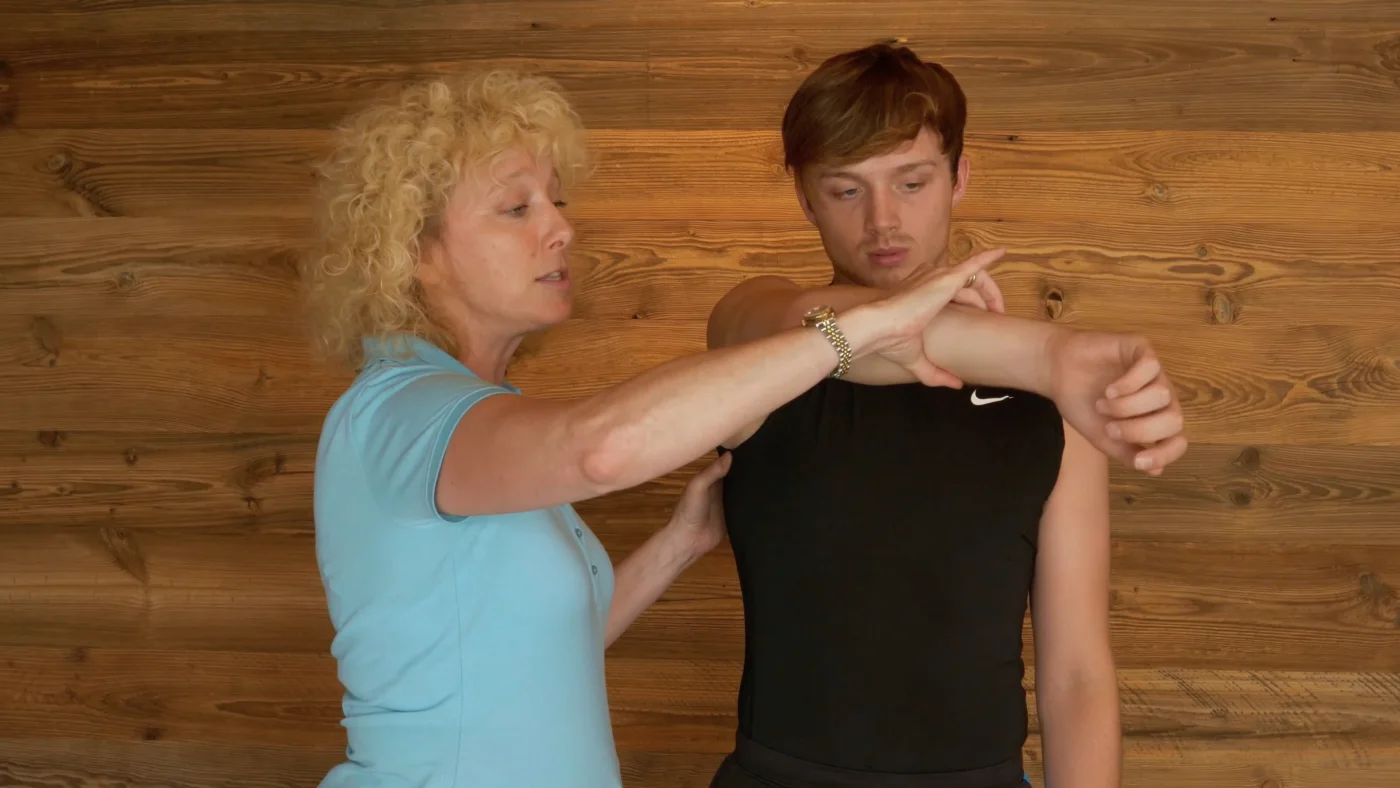
You'll be glad to know there is a simple way to understand and diagnose shoulder pain
Use a new, simple, evidence-based approach to shoulder assessment
You can quickly learn and use a new, simple approach to shoulder assessment that provides all the information you need to accurately diagnose and treat your patient's shoulder pain.
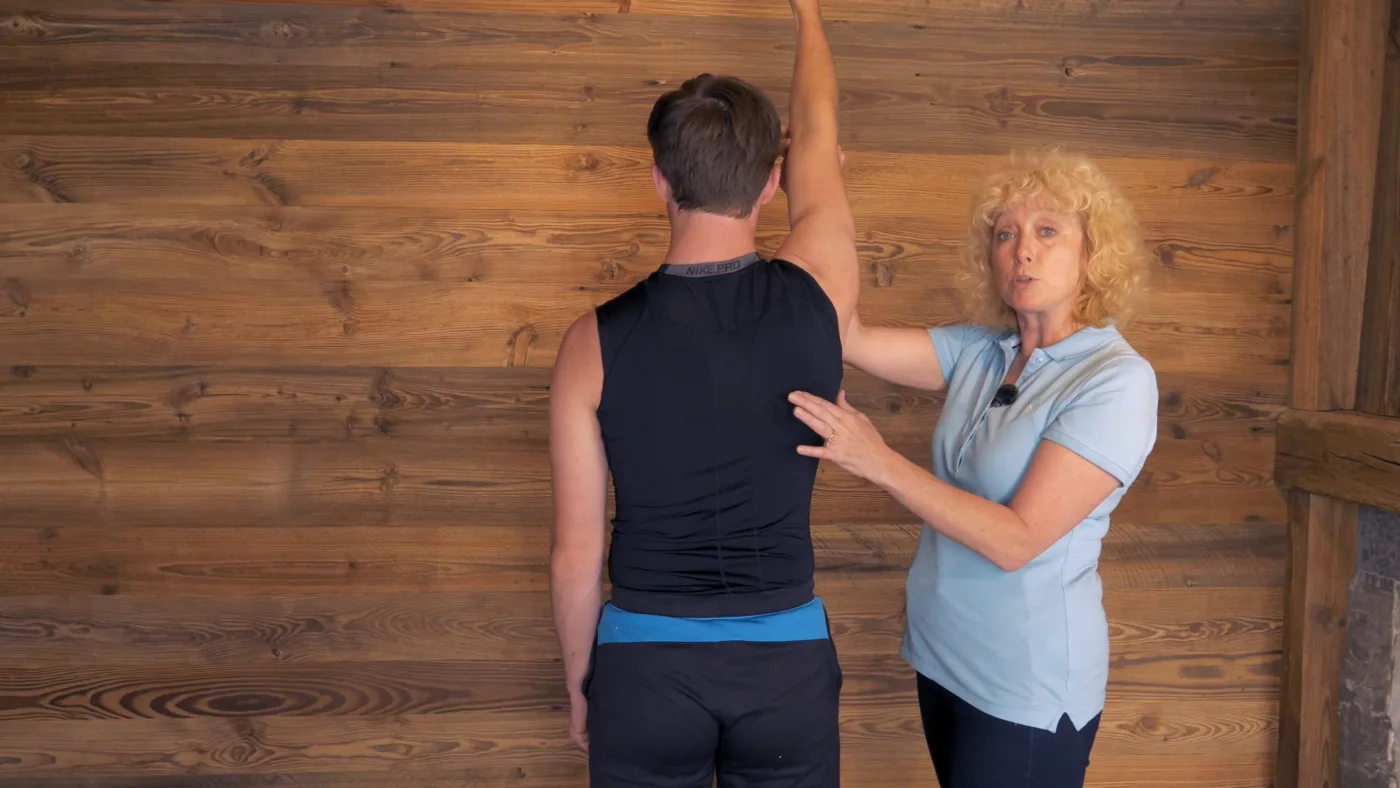
Get your access to the Simple shoulder assessment online course now!
Hi, it's Jo Gibson (Upper Limb Rehabilitation Specialist Physio) and David Pope (APA Titled Musculoskeletal & Sports Physio) here.
We have an online course with five modules that'll show you
1. How to assess your shoulder pain patients using a simple, accurate assessment
2. Frozen shoulder - How to assess, diagnose and treat frozen shoulder patients and
3. Stiff shoulders - How to assess, differentiate and treat shoulder osteoarthritis, frozen shoulder, rotator cuff arthropathy, avascular necrosis, posterior dislocation and more.
If you've been struggling with patients experiencing shoulder pain and stiffness, then you need this online course.
Register now to receive immediate access to this online course
In this online course you’ll discover:
- Video demonstrations of how to use a simple assessment with rotator cuff related shoulder pain patients and settle their pain quickly
- How to diagnose five key types of shoulder pain
- Special tests for rotator cuff tears & labral pathology and whether they are useful
- The secret clues hidden in your patient's history that guide your diagnosis
- How to rule out anything nasty (red flags)
- Stiff & frozen shoulders and how to differentiate stiffness from
bony causes (e.g. OA)
- capsular causes (e.g. frozen shoulder) and
- muscular causes (e.g. protective patterns)
- How to identify treatment options that will target your patient's shoulder pain and give you the best outcomes
- A case study to guide you through shoulder assessment

Module 1 - Shoulder special tests
In this module, you'll examine some of the special tests for rotator cuff tears and labral pathology to see which tests provide clinically useful information.
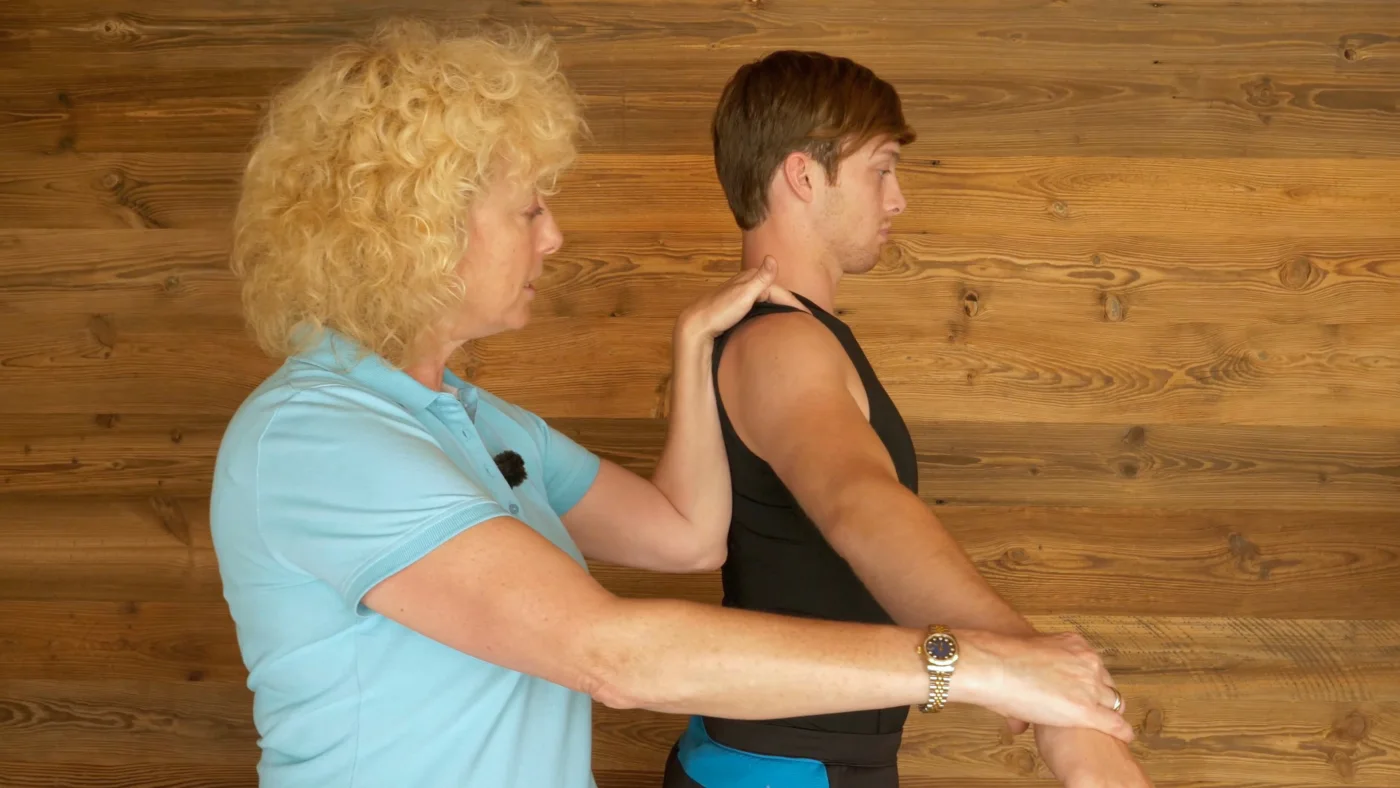
Module 2 - Shoulder diagnosis
When can we diagnose shoulder pain? When is diagnosis important, and how will it help you?
Find out a simple approach to shoulder assessment & diagnosis in this module.

Module 3 - Simple shoulder assessment
In this module you'll discover how to use shoulder improvement tests in your assessment to immediately change patients shoulder pain.

Module 4 - Frozen shoulder assessment, diagnosis & treatment
Diagnosis and appropriate management in the early stages of frozen shoulder is crucial to your patient's treatment outcomes. If you miss (or misdiagnose) a case of frozen shoulder, your patient will have a much slower recovery.
In this module you'll discover how to confidently identify and assess patients in these early stages of frozen shoulder, when they have a lot of shoulder pain, but haven't yet developed a lot of joint stiffness.
You'll provide the right treatment to improve frozen shoulder patients' pain and range of movement, before their pain gets worse and they take longer to get better.

Module 5 - Stiff shoulder assessment, diagnosis and treatment
When your patient has a stiff and painful shoulder, how can you identify if your patient has frozen shoulder, osteoarthritis, rotator cuff arthropathy, avascular necrosis or another cause?
Your patient is going to have a hard time getting their rotator cuff and surrounding muscles doing their job in the presence of stiffness. Do we plug away at the exercises, stretch or mobilise their shoulder, wait for it to “thaw”, get an injection or something else?
In this video series, Jo Gibson (Clinical Specialist Physio) will guide you through how to assess, diagnose and treat the common causes of a stiff, painful shoulder, including frozen shoulder, osteoarthritis, rotator cuff arthropathy, avascular necrosis and other common causes.

This isn't for everyone
This course is NOT for everyone. We're only making it available to you as a Physiotherapist, Physical therapist, health professional or student studying one of these areas.
What Jo Gibson and I are going to share with you will help you assess and diagnose shoulder pain, frozen shoulders and stiff shoulders MUCH quicker and more effectively than any approach you've used in the past.
"These videos have been amazing! I've just moved from Ortho to MSK as a First Contact Practitioner and have just spoken to a lady with a frozen shoulder that I am super confident with diagnosing due to these videos."
AMY TILDESLEY
Physio & First contact practitioner
UK
Register now for immediate access to the Simple shoulder assessment online course
Just click the Register button below, and fill out the form to get your immediate access to this entire online course, and incorporate the latest evidence into your assessment and treatment of shoulder pain, frozen shoulder and stiff shoulders.
There's no catch. We're giving such inexpensive access to this video series because we want you and your patients to benefit immediately. We want you to be confident with all shoulder pain, frozen shoulder and stiff shoulder patients.
What's included?
Here's what you're getting for just one low price of 99 Australian dollars (AUD)....
-
12 months unrestricted access to five hours of practical shoulder training, contained in five easy to access shoulder assessment & treatment modules:
-
How to easily assess rotator cuff related shoulder pain patients
-
How to accurately assess & diagnose frozen shoulder, osteoarthritis, rotator cuff arthropathy, avascular necrosis, posterior dislocation or muscular stiffness
-
How to effectively treat patients with a stiff or frozen shoulder
-
-
Seven shoulder assessment infographics
-
Audio files of all videos for you to download and keep
-
Certificate for your CPD records
-
90 day satisfaction guarantee. Love this video series, or we'll refund 100% of your entire registration fee, AND you'll keep your access for the full 12 months.
Click that Register button for your access now.
You'll love it. We guarantee it!
If you don't love it, let us know any time within 90 days of registering, and we'll refund your money, AND you'll keep your access to the videos for the full 12 months.
Ticket Selection
- 12 months unrestricted access to the Simple shoulder assessment online course with Jo Gibson
- Detailed practical video demonstrations of how to assess shoulder pain patients
- Simple shoulder assessment & diagnosis infographic series
- Video series taking you through exactly how to assess, diagnose and treat frozen shoulder
- Frozen shoulder assessment & treatment infographic series
- Watch the videos as many times as you like, on any device
- Certificate on completion for your CPD/CME records
- 100% Satisfaction guarantee. Love it or receive a full refund AND keep your access
References
-
Dean BJ, et al. Why does my shoulder hurt? A review of the neuroanatomical and biochemical basis of shoulder pain. Br J Sports Med. 2013 Nov;47(17):1095-104
-
Lo CN, et al. The major pain source of rotator cuff-related shoulder pain: A narrative review on current evidence. Musculoskeletal Care. 2023 Jun;21(2):285-293
-
De Baets L, et al. The influence of cognitions, emotions and behavioral factors on treatment outcomes in musculoskeletal shoulder pain: a systematic review. Clin Rehabil. 2019 Jun;33(6):980-991
-
Littlewood C, Moffatt M, Maher N, Irving G. Current and future advances in practice: tendinopathies of the shoulder. Rheumatol Adv Pract. 2023 Oct 25;7(3):rkad086.